“Is there actual titanium in it?” People often ask that about the titanium lifting Seoul clinics put on their menus, sometimes right after a search for titanium prices in Korea turned up scrap-metal rates per kilo. Behind the question is a quieter thought: if I can't even tell what this treatment is, how would I know it's right for my face, or for my mother's?
No metal goes anywhere near your skin. In Korea, titanium lifting usually means a laser session on Soprano Titanium, which sends three wavelengths (755, 810 and 1064 nm) into the skin as heat to prompt new collagen. It fits early loss of firmness better than heavy jowls, and a full course is 3 sessions spaced 3–4 weeks apart.
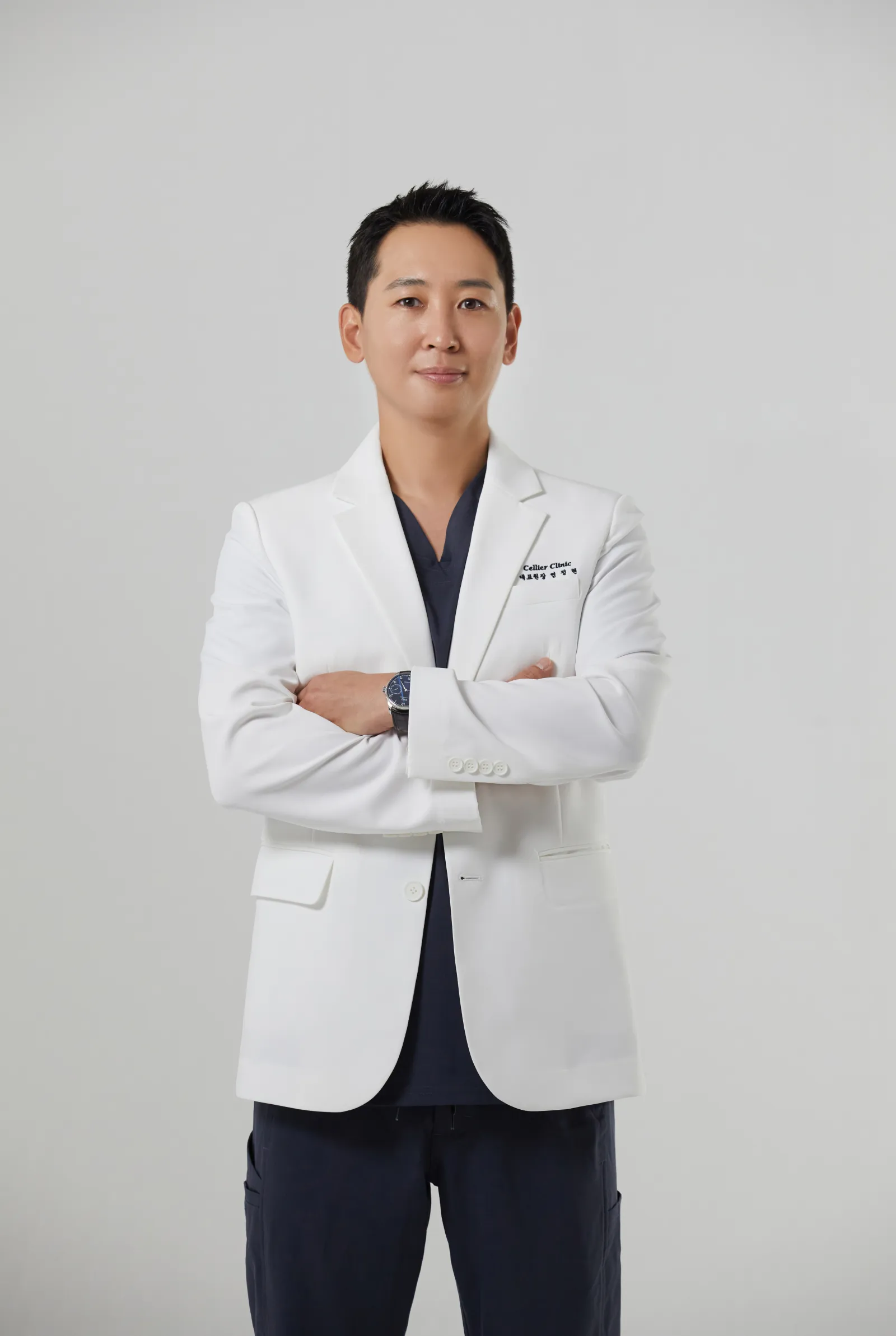
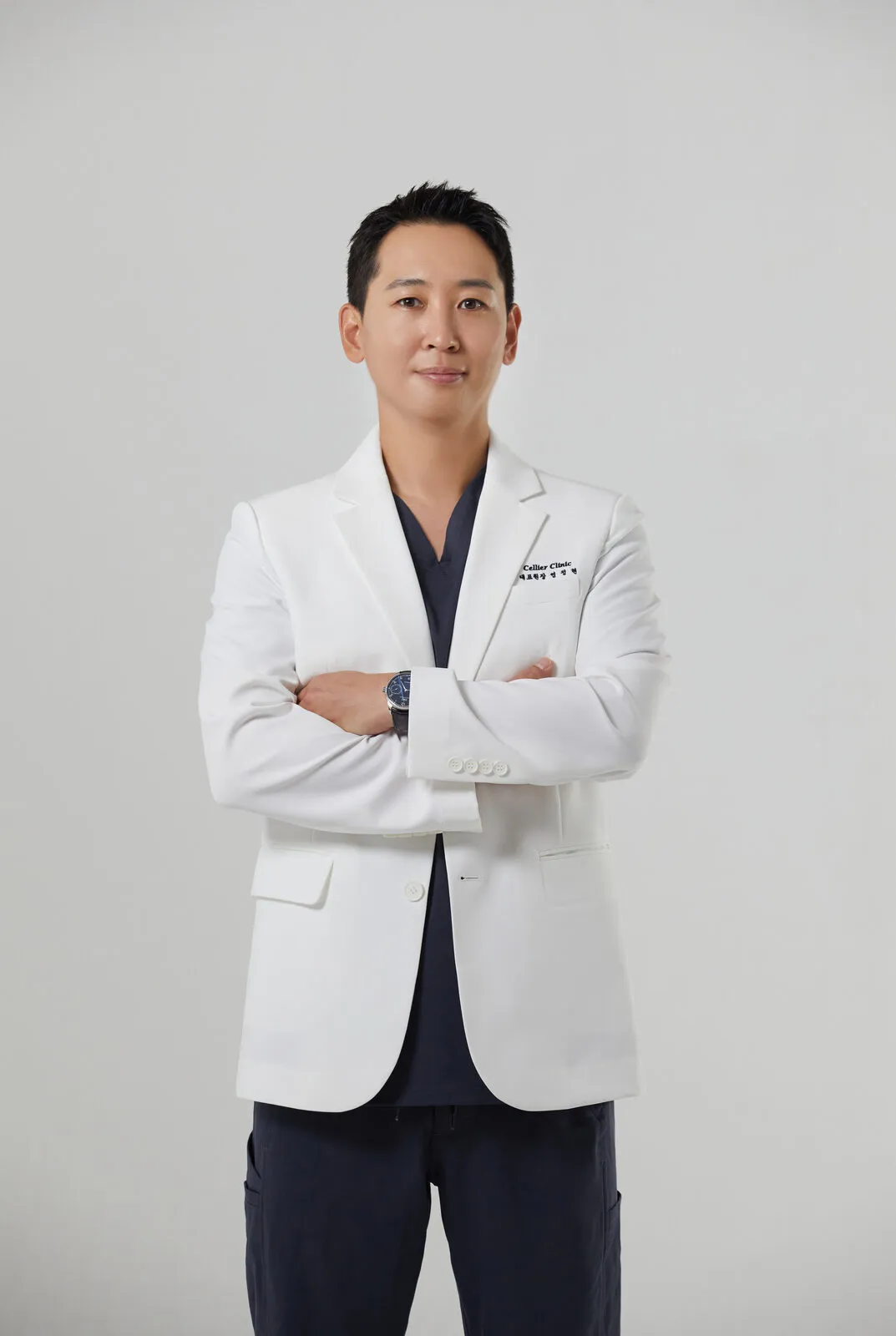
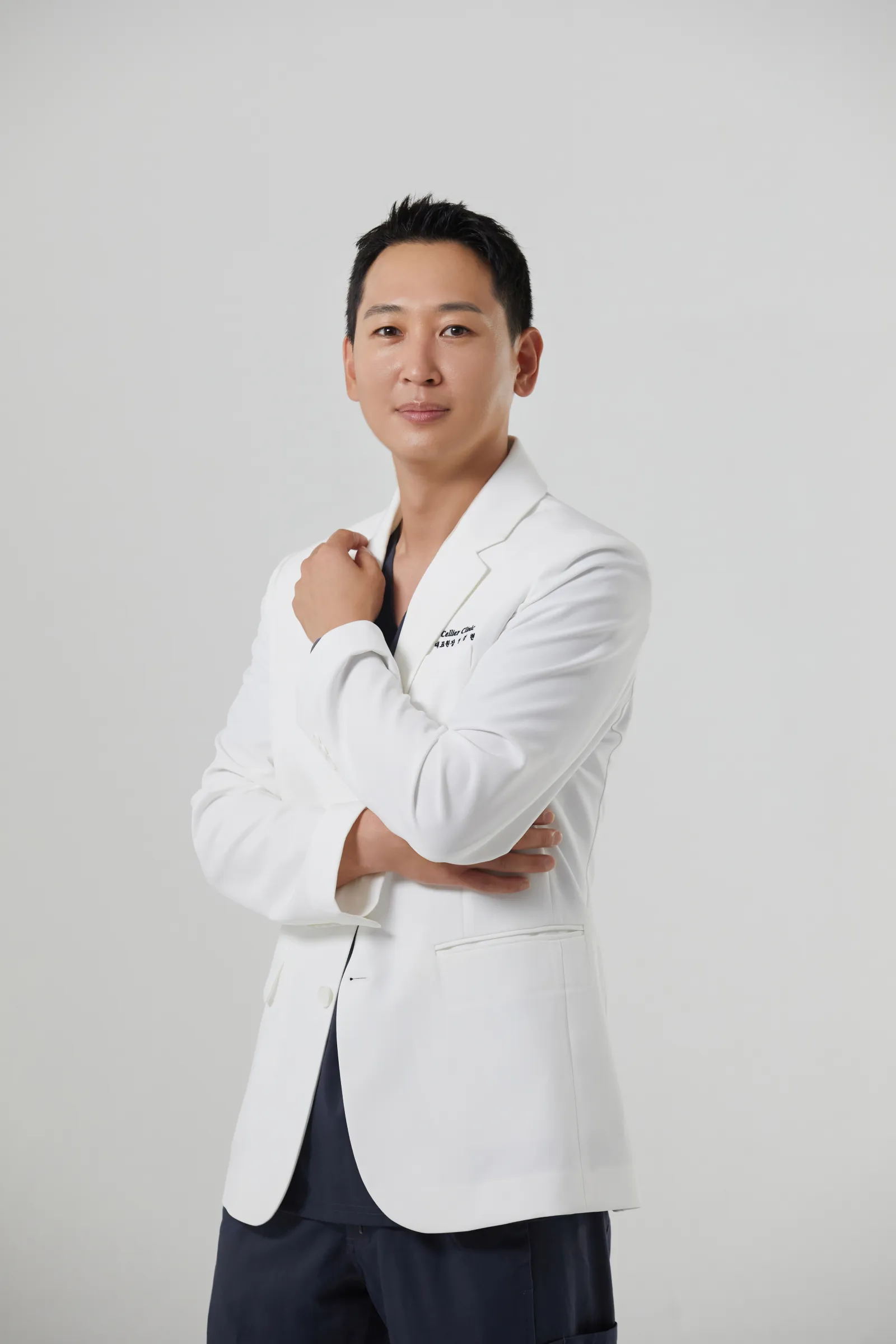
Hello, I'm Dr. Junghyun Youm, Director of Cellier Clinic in Gangnam.
I'm a surgeon by training and a member of the Korean Society of Lifting, and that background matters for this question: whether a laser is enough depends on which layer has dropped, the skin or the structure beneath it. I see every patient one-on-one and assess skin, muscle, bone structure, fat and volume together.
If you can't tell whether your sagging sits in the skin or deeper, take one front photo and one side photo in daylight, without makeup, and send them on WhatsApp with your travel dates. Ask whether starting a course on this trip makes sense for a face like yours.
What is titanium lifting, if there's no titanium in it?
The name comes from the machine. Soprano Titanium is a diode laser platform that much of the industry knows for hair removal.
Think of steam-pressing a linen jacket. Nothing is cut and nothing is added; the fibers are warmed until they settle tighter. Collagen behaves in a similar way under controlled heat: existing fibers contract slightly, and over the following weeks the skin lays down new collagen. With Soprano Titanium the first change usually shows within about a week, and the full effect comes after the third session.
Each session takes about 20 minutes for a 40kJ protocol. Because the same light reaches pigment and small vessels near the surface, the treatment is aimed at lifting, elasticity and skin tone together, which is why people often describe their skin as looking brighter as well as firmer. It belongs to the same no-downtime tightening family as Onda, which uses microwave energy instead of light; why Onda is also planned as three sessions follows the same logic of repeated visits.
Who titanium lifting in Seoul suits, and who needs a deeper layer
A laser working at dermal depth tightens the skin envelope. It can't reposition fat pads that have slid down, and it doesn't reach the SMAS, the fibrous layer a surgeon lifts in a facelift. So the deciding question is where the drop starts.
The face that tends to do well with a Korean titanium lifting treatment looks like this:
fine lines and a jawline that has softened slightly, without a hanging fold
thinner skin that creases like tissue paper when you pinch it
dullness and uneven tone alongside the loss of firmness
a schedule with no room for visible downtime
Where a heavy jowl hangs below the jaw, deep folds run from nose to mouth because volume has descended, or the neck skin is loose enough to gather in your hand, laser heat at this depth will likely feel underwhelming. Focused ultrasound such as Ultherapy PRIME is designed to reach the SMAS, and thread lifting places a physical lift, with about one week of downtime. If you're unsure which group you fall into, how depth decides between ultrasound and radiofrequency lifting walks through the layers in more detail.
Say you're 61 and visiting Seoul for six nights with your son. Your cheeks look tired in photos and the jawline has lost its edge, but when you pinch the skin along the jaw it is thin and lifts easily, and there's no fold sitting below the jawbone. That points to the skin envelope, which is the layer this laser works on. Now picture the same trip with a jowl that stays heavy when you tip your chin up. I would talk about a deeper layer before any laser, because three sessions of mild change on that face tends to disappoint.
Can three sessions fit around a trip to Seoul?
Usually not in a single visit, and it's the planning fact people tend to miss. Three sessions spaced 3–4 weeks apart means the course runs about six to eight weeks from the first session to the last.
That leaves three honest options. You can start with one session on this trip, knowing it is the first step of a course rather than the finished result. If you live or work in Asia and can return twice, you can spread the three sessions across visits. Or, if a single trip is all you have, you can ask whether another treatment with a different schedule suits your dates better. Planning skin treatments around a Seoul clinic visit covers how to order treatments when the days are limited.
The clinic is open weekdays 10:00 AM to 8:00 PM with lunch from 2:00 to 3:00 PM, and Saturdays 10:00 AM to 4:00 PM. It is closed Sundays and public holidays, and the last reservation is one hour before closing. If you land on a Saturday evening, Monday is your first realistic day. Since the session itself is about 20 minutes and lifting devices in this category are listed with no downtime, an afternoon appointment still leaves the evening free.
If you're juggling a fixed return flight, send your exact dates on WhatsApp, and mention whether you expect to be back in Korea within the next two months. Ask whether one session now is a sensible start for you, or whether your window suits something else.
Redness, pigment and facial hair: the risks to know
The usual reactions are warmth and mild redness, which tend to settle within hours, sometimes with slight puffiness for a day. Less often, heat builds too much in one spot and causes a small burn or blister. Darker or recently tanned skin carries a higher chance of postinflammatory hyperpigmentation, the brown patches that can follow any inflammation and may take months to fade.
One thing rarely mentioned on menus: facial hair. Men who want to keep a beard, and anyone who wants to keep hair at the sideburns, should say so before the session so those areas can be avoided or discussed.
It's generally wiser to wait if you have:
a tan or sunburn from the last few weeks
an active infection, cold sore or inflamed acne in the area
taken isotretinoin recently
had a peel or another laser on the same area recently
a pregnancy, or medication that makes your skin sensitive to light
How strongly your skin reacts will vary with its type and the energy used. After you fly home, wear sunscreen daily and keep the area out of strong sun for the first weeks. If you notice a blister, crusting or a darkening patch, photograph it in daylight, don't pick at it, and see a local doctor if it is spreading or painful.
What decides the cost of a titanium lifting laser course?
The figure for your case mostly depends on:
how many sessions you do, one on this trip or the full three
the energy per session, since protocols are measured in kJ
which areas are treated, face only or face plus neck and under the chin
whether it's combined with another treatment on the same visit
how many trips the course is spread over
Ask on WhatsApp what it would cost for your case, with a front photo and a note of which areas bother you most.
What should you ask any clinic before booking?
Use these questions wherever you book; the answers will tell you more than any menu photo:
- Which machine is it, by name? Several devices carry “titanium” in their marketing, and the name tells you the wavelengths.
- Who examines your face, and is that the person who plans the energy?
- How many sessions do they expect for your skin, and how far apart?
- What energy per session, and which areas does that cover?
- If redness or darkening appears after you've flown home, who do you contact, and how?
- Is an interpreter available for the person actually being treated?
Where I stand on titanium lifting
I like titanium lifting for one kind of face: skin that has loosened before the structure underneath has dropped. I'm cautious about offering it as the answer to heavy jowls, because heat at dermal depth can't lift what has slid below it. A surgeon's understanding of facial structure is why I start from the layers, and only then choose the device.
There's no need to settle this from a phone screen tonight. A course of three works best when your calendar can carry it, so it's fine to start when the dates line up.
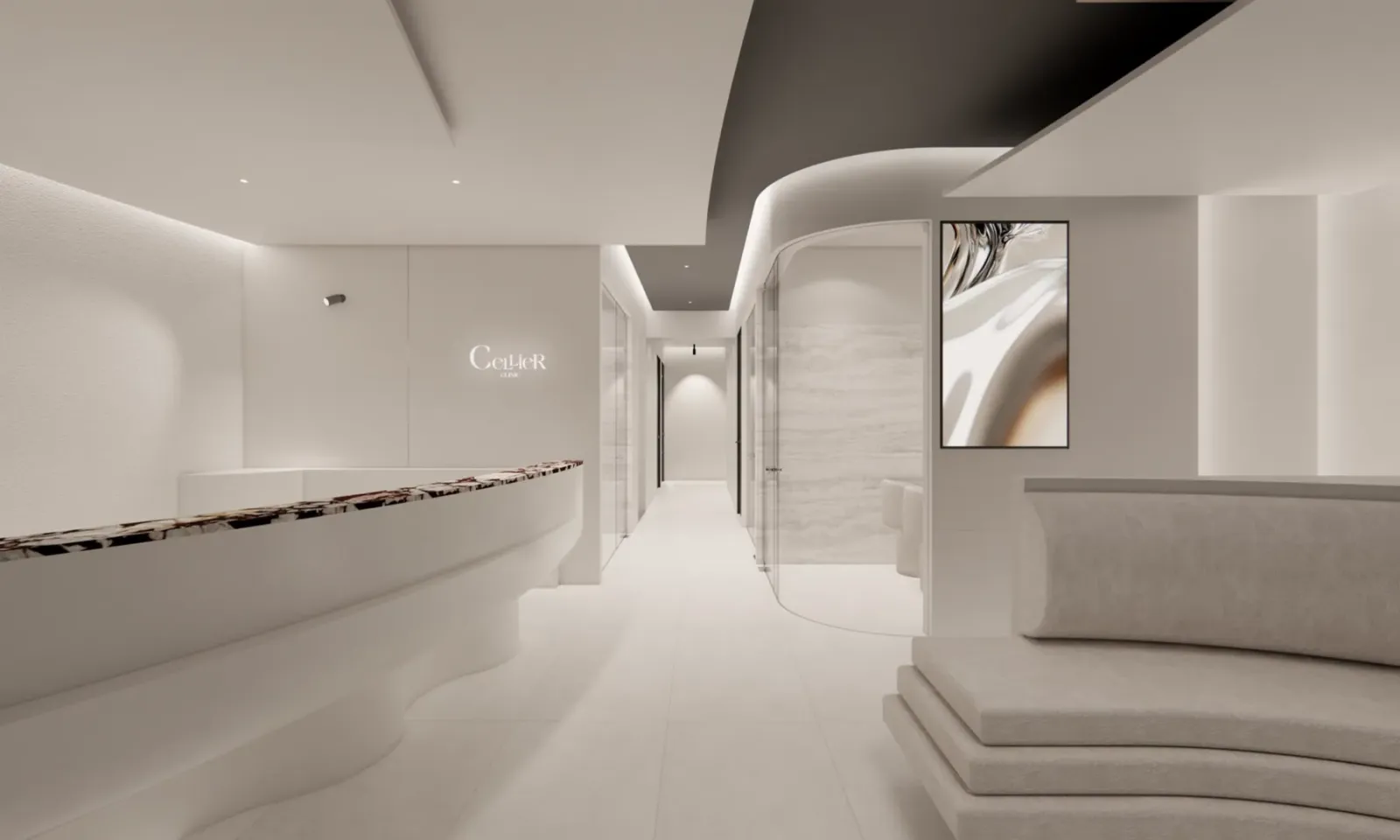
If you're planning this for yourself or a parent, send two daylight photos on WhatsApp, front and side, with your travel dates, and ask the question this post keeps returning to: is the sagging in the skin or deeper? The clinic is on the 5th floor of Rex Tower, 108 Dosan-daero, Gangnam-gu, about a minute's walk from Sinsa Station exits 1–2. What decides your plan there is how far the jawline has dropped below the skin and how your skin handles heat, and what a first consultation in Gangnam looks like for an international patient shows how that visit runs.
— Dr. Junghyun Youm, Director
Sources
- American Academy of Dermatology — Firm sagging skin
- DermNet — Postinflammatory hyperpigmentation