
Making your own HIFU vs RF lifting Myeongdong Seoul comparison from a hotel room, after a lifting treatment at home barely changed your jawline?
HIFU focuses ultrasound into small points as deep as the SMAS, the fibrous layer under the fat that a surgical facelift tightens. RF warms the dermis and the fat beneath it as a broad sheet. If your skin is thick or an earlier session did little, the layer you reach matters more than the brand, and when tissue has truly dropped, threads do something heat can't.
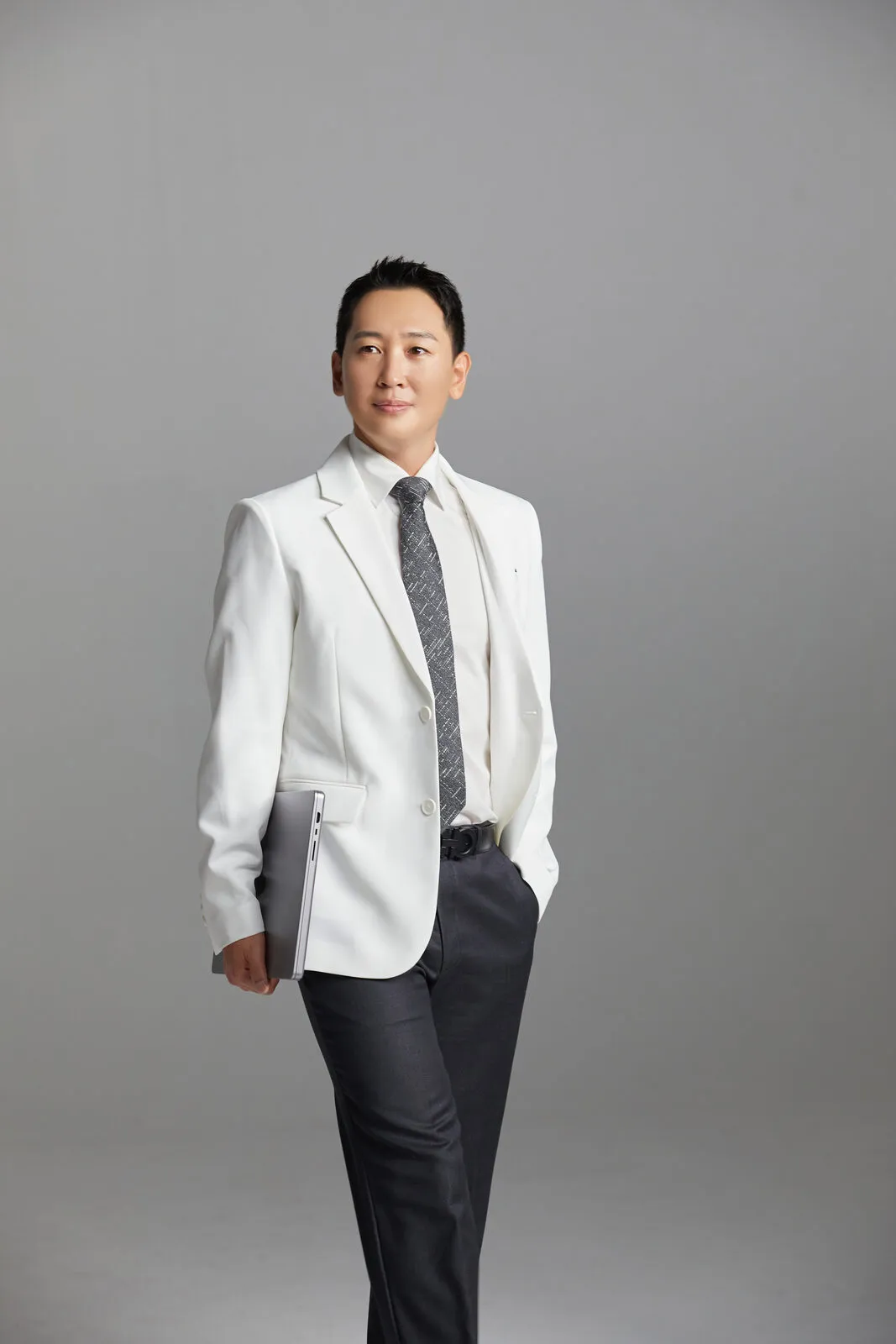
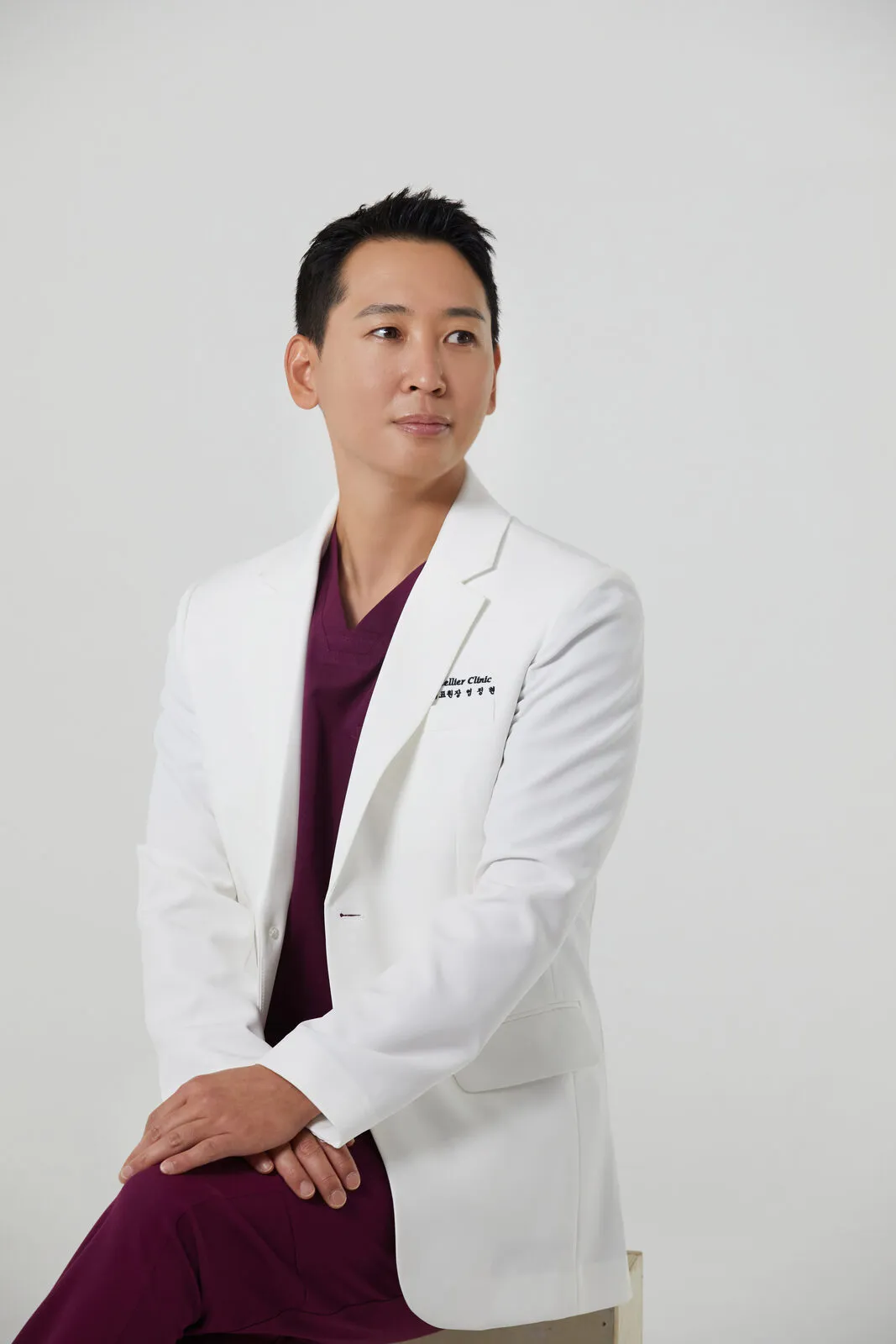
Hello, I'm Dr. Junghyun Youm, Director of Cellier Clinic in Gangnam.
I'm a surgeon by training and a member of the Korean Society of Lifting, and I see every patient one-on-one. Skin, muscle, bone structure, fat and volume are assessed together, which is the point here: HIFU or RF is really a question about which layer has loosened. Both device families sit on our menu alongside thread lifting, so the answer doesn't have to bend toward one machine.
If you're weighing this now, email two daylight photos to cellier.clinic@gmail.com, one from the front and one from the side with your chin level, plus the name of the lifting treatment you had at home if you still have it. Ask which layer that treatment was aimed at. The old device name often explains half of why it underdelivered.
What actually separates HIFU from RF?
Both heat tissue so collagen contracts and then rebuilds over the following weeks. The difference is shape and depth: HIFU places tiny focused heat points at set depths, down to the SMAS, while RF spreads heat through a volume of dermis and fat.
Think of a lined winter coat that has started to sag at the hem. HIFU takes in the inner lining at fixed points. RF steams the outer wool so it shrinks a little everywhere. Which one helps depends on whether the lining or the wool has stretched.
In numbers, the spread is real. Sofwave delivers 11.5 MHz ultrasound through seven transducers at a depth of 1.5 mm. Ultherapy PRIME sends focused ultrasound down to the SMAS and uses DEEP SEE real-time imaging, so the operator can see the skin layers while placing energy. Thermage FLX uses monopolar RF to carry heat into the dermis and the subcutaneous fat layer.
None of these devices moves bone or replaces volume that has been lost from the cheeks. If a hollow under the cheekbone is making the jaw look heavy, heat alone won't fill it, and that's worth knowing before you choose between two energy types.
Which ultrasound option fits which face?
We have three ultrasound devices for the face, and they aim at different depths. The deeper the sag, the further down the list you look.
Ultherapy PRIME is the one aimed at the SMAS. Its own page lists people whose thick skin has made lifting effects weak in the past, and people who want a strong lifting effect. A session takes 20 to 30 minutes on a 300-shot protocol, results show from around week 4, and the listed duration is 6 to 12 months. Topical numbing, a nerve block or IV sedation are all options.
Coolsoniq is HIFU with a patented cooling applicator that protects the surface while delivering up to 1.5 J. A pen-type cartridge reaches curved areas that larger HIFU heads struggle with. It takes about 10 minutes on a 5,000-shot protocol, needs no anesthesia, and tightening is felt right after, with the full collagen effect by 4 to 6 weeks. It suits someone who wants lower discomfort or is maintaining an earlier lift.
Sofwave works shallower, at that 1.5 mm, with cooling. It takes 15 to 20 minutes on a 100-shot protocol and builds from around 1 month to a peak at 3 months. For fine lines and firmness in thinner skin, that depth makes sense; for a heavy jowl in thick skin, it's the wrong layer.
Which RF option fits which face?
RF suits skin that has loosened as a surface: crepey texture, fine laxity across the cheeks and neck, skin that feels thin when you pinch it.
Thermage FLX heats the dermis and the fat layer beneath with monopolar RF, and the device reads the skin during treatment to set the energy level. It's the RF choice when the looseness spreads over a wide area. Anesthesia options match Ultherapy PRIME. If it's already down to those two names, I've laid out how Ultherapy PRIME and Thermage FLX differ for a given face.
Density High sends RF deep into the dermis in about 20 minutes on a 300-shot protocol, without anesthesia. It shows from around week 1 and peaks at 3 to 4 weeks, lasting 3 to 6 months, which helps if you have an event soon after landing home.
Emface pairs RF with HIFES muscle stimulation, so it works on muscle tone as well as skin. A session takes about 20 minutes, needs no anesthesia, and the change is often noticeable right after the first one.
Risks and side effects to know
Two neighbors get confused with these. Onda uses microwave energy, not RF, and reaches full effect after three sessions spaced 3 to 4 weeks apart, so one trip rarely covers it. RF microneedling is another tool again: needles carry RF into the skin for pores and scars, and why Potenza often takes more than one session is its own topic.
Ultherapy PRIME. Energy and target: Focused ultrasound down to the SMAS, with imaging; Timing listed on its page: 20–30 min; from around week 4; 6–12 months.
Coolsoniq. Energy and target: Focused ultrasound with a cooling applicator; Timing listed on its page: About 10 min; full collagen effect by 4–6 weeks.
Sofwave. Energy and target: Ultrasound at 1.5 mm, with cooling; Timing listed on its page: 15–20 min; from about 1 month, peak at 3 months.
Thermage FLX. Energy and target: Monopolar RF into dermis and fat; Timing listed on its page: Session timing confirmed at consultation.
Density High. Energy and target: RF deep into the dermis; Timing listed on its page: About 20 min; from week 1, peak at 3–4 weeks; 3–6 months.
Emface. Energy and target: RF plus muscle stimulation; Timing listed on its page: About 20 min; often visible after one session; about 6 months.
Thread lifting. Energy and target: Biodegradable threads under the skin; Timing listed on its page: 20–30 min; lift visible right away; about 1 week of downtime.
Durations are the ranges given on each treatment page; skin condition decides where you land within them.
Thick skin, or HIFU that did nothing at home: what now?
A weak response usually comes from one of three things: too little energy, energy at a layer that wasn't the loose one, or sag that has gone past what heat can tighten. Each has a different fix, so the old result isn't a verdict on HIFU.
Say you're 43, the skin over your lower jaw is thick, and one HIFU session at home gave a faint tightness that faded within weeks. You're staying in Myeongdong for seven nights. The question that sorts this is whether the skin has loosened or the tissue under it has descended. If the jowl sits only slightly below the jawline and the skin is thick, I'd want energy at the SMAS, with Ultherapy PRIME, since that's the group its page describes.
If the skin pinches thin and crepey over a firm structure, RF is the better match.
If the jowl hangs clearly below the jawline even when you sit upright, I'd tell you that heat alone is unlikely to satisfy you. Thread lifting places biodegradable threads beneath the skin, the lift is visible right after treatment, and the contour keeps building as collagen forms around the threads. It comes with about a week of downtime under local anesthesia or sedation, so on a seven-night trip it belongs on day one or two.
The number of threads changes the plan, and counting threads before comparing thread lift quotes explains why. At consultation I recommend one approach or a combination, depending on what's loose.
A HIFU session that did little at home tells me something about depth, dose or how far the tissue has dropped. It doesn't tell me your face won't respond. With thick skin, I'd rather reach the layer that's loose once than repeat sessions at a layer that isn't.
If that hypothetical sounds like your face, add a third photo to your WhatsApp message, taken while you look down at your phone, which shows where the lower-face tissue falls. Include the date you land and ask whether your stay leaves room for a week of thread downtime.
Redness, nerve tingling, thread trouble: how likely are they?
The common reactions are short-lived. After some energy treatments, Ultherapy PRIME among them, mild redness, swelling or a tingling sensation can appear and typically settles on its own. RF can leave the skin warm and pink for a few hours. Most of the energy options here list no downtime at all.
Numbness and bruising: what to watch for
Less often, focused ultrasound near a nerve can cause temporary numbness or weakness in part of the face, and any heat-based device can rarely leave a small burn. Threads carry their own list, which the American Society of Plastic Surgeons sets out: bruising, swelling, dimpling, a thread you can feel or see, asymmetry and infection. Most of these are minor and temporary, but a thread that becomes visible may need removal.
In general, wait or skip these treatments if you're pregnant or breastfeeding, have an infection or active acne in the area, have taken isotretinoin recently, or have an implanted electronic device such as a pacemaker, which matters especially for RF. Tell the doctor about blood thinners and any filler or threads already in the area. How your skin reacts varies from person to person, and that's why these points get checked first.
Once you're home, keep a note of the device, the shot count and the areas treated, so any doctor you see knows what was done. Swelling that grows instead of shrinking, heat, fever or a thread poking through after a thread lift means seeing a doctor promptly. Before you book, ask on WhatsApp how to reach the clinic with a photo if something changes after you fly.
How do you get from Myeongdong to Sinsa?
Any HIFU vs RF lifting Myeongdong Seoul comparison you make has to include the ride, because the clinic is south of the river, near Sinsa Station. From Myeongdong Station on Line 4, it's one stop to Chungmuro, where you change to Line 3 heading south to Sinsa. Exits 1 and 2 put you about a 1-minute walk away.
We're open Monday to Friday 10:00 AM to 8:00 PM, with lunch from 2:00 to 3:00 PM, and Saturday 10:00 AM to 4:00 PM. Sundays and public holidays are closed, and the last reservation is one hour before closing, so a Saturday slot needs to start by 3:00 PM. If you choose IV sedation, keep the rest of that day empty. For fitting several treatments around one visit, planning skin treatments around a Seoul clinic visit walks through the order.
Questions worth asking any clinic before you choose
In short, it doesn't have to be us. Wherever you book, these questions separate a considered plan from a device sale:
- Which device, by name, and which layer it is aimed at on your face.
- How many shots or how much energy, and why that number for your skin thickness.
- Whether the doctor who examines you is the one who plans your treatment.
- Which anesthesia options exist, and how much of your trip a sedation day takes.
- When you'd judge the result, since collagen keeps building after you're home, and what happens if the response is weak.
- How to reach the clinic with a photo once you've flown back.
Where I stand on HIFU versus RF
I don't see HIFU and RF as rivals. With thick skin that has sagged, I start the conversation at the deeper layer; with thin, crepey skin, I lean toward RF; and when the tissue has dropped past what heat can tighten, I'd rather say so and talk about threads than sell you a second round of energy. You don't have to pick a device before you land.
Cellier Clinic is at 5F, Rex Tower, 108 Dosan-daero, Gangnam-gu, Seoul. For a first message, a front photo, a side photo and your travel dates are enough, with one question: given what I had done at home, which layer would you aim at? You can also ask how the deposit and payment work, since those are settled after the consultation.
What usually tips HIFU against RF is how thick the skin over your jaw is and whether the tissue under it has descended, and a side photo in daylight shows most of that, so send it on WhatsApp.
— Dr. Junghyun Youm, Director
Sources
- American Academy of Dermatology — Firm sagging skin
- American Society of Plastic Surgeons — Thread Lift Risks and Safety Information
- American Society of Plastic Surgeons — Thread lift