
Is Korean acne scar treatment worth building a Seoul trip around when years of serums, peels and spot creams haven't changed the dents in your cheeks?
It can be, if most of your scars are rolling or boxcar scars. Those usually soften over a series of RF microneedling sessions spaced weeks apart, and rarely in one visit. Narrow ice-pick scars and flat red or brown marks need different tools, so the first thing to settle is which kind you have.
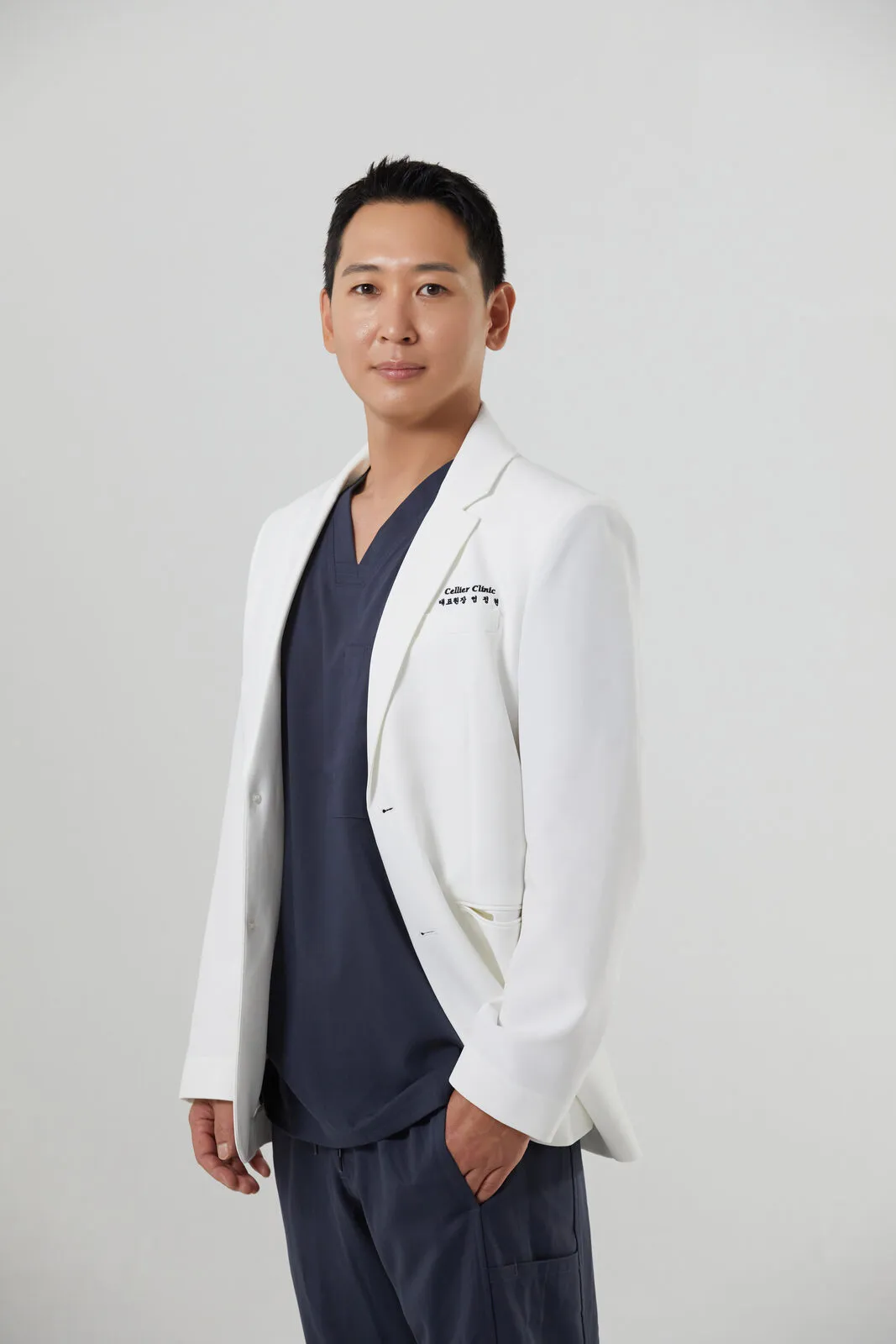
Hello, I'm Dr. Junghyun Youm, Director of Cellier Clinic in Gangnam, Seoul.
I trained as a surgeon at Kyung Hee University Hospital at Gangdong. I see every patient one-on-one and examine the face in person before any plan is made. With scars that matters, because skin thickness, the fat under the cheek and how tightly each scar is tied down decide which ones will lift.
Before you message, stand beside a window and take one photo of your cheek with daylight coming from the side. Overhead lights and ring lights flatten dents, and side light shows how deep they really are. Send the photo on WhatsApp with your travel dates and the one thing you most want to know, for example whether a single trip is enough to see a change.
Which acne scars respond to treatment in Korea?
Acne leaves two kinds of trace, and only one of them is a scar. A flat brown or red mark is leftover pigment, or small blood vessels that stayed widened after the inflammation. It has no dent, and it often fades on its own over months. A true scar is a change in shape: collagen in the deeper layer of skin was lost, or pulled tight, while a deep spot healed.
Wide, soft-edged hollows that look worse in side light. What it usually is: Rolling scars, tethered by bands under the skin; What tends to help: Collagen-building treatment such as RF microneedling; sometimes releasing the bands.
Round or oval dents with sharp edges and a flat floor. What it usually is: Boxcar scars; What tends to help: RF microneedling or resurfacing; deeper ones may need more than one method.
Narrow, deep pits, like a needle prick. What it usually is: Ice-pick scars; What tends to help: Techniques that work inside each pit, one scar at a time.
Flat brown spots. What it usually is: Post-inflammatory hyperpigmentation; What tends to help: Sun protection, time, a pigment laser.
Flat red or purple spots. What it usually is: Post-inflammatory redness; What tends to help: Time, a laser that targets redness.
Firm raised bumps. What it usually is: Hypertrophic or keloid scars; What tends to help: Usually injections into the scar; heat-based devices need caution.
A rolling scar behaves like the button on an upholstered cushion. The fabric on the surface is fine, but a cord underneath pulls it down. That's why rolling scars look mild at your desk under ceiling light and much deeper in a bathroom mirror with a lamp to one side. Smoothing the surface alone does little for them. You can check this at home: gently stretch the skin of your cheek between two fingers.
Pits that stay put under tension are deeper or narrower.
A lot of advice about Korean skincare for acne scars is really advice about marks. An exfoliant or a retinoid can help brown marks fade sooner, and a mild cleanser keeps new breakouts from adding to them. No cream can rebuild collagen that's missing from beneath the surface, though. If your dents have looked the same through a year of careful skincare, the products haven't failed. They work on a different layer.
And if dull, dehydrated skin bothers you more than the dents do, what a skin booster does and who it suits is a better place to start.
How Potenza works on a scar
Potenza pairs very fine microneedles with radiofrequency energy delivered deep into the skin. The needles make tiny channels and the energy heats the layer beneath the scar. Over the following weeks, the skin responds by making new collagen and elastin. On our menu, the device is used for pores, scars and skin firmness.
For rolling and shallow boxcar scars, that depth is the point. The missing support sits below the surface, so heating the lower layer while leaving most of the surface intact treats the layer where the problem is. Recovery is usually shorter than with lasers that remove the surface layer.
Collagen takes months to remodel. Three months after a session you'll often see more change than you did at three weeks, which is why a scar plan is counted in sessions and seasons, not days.
Flat brown marks are a pigment problem, and that's where a pigment laser is the tool I'd reach for. What a PicoSure Pro pigmentation treatment involves is covered in a separate post. For leftover redness, ask about Clarity II, a dual-wavelength laser on our menu that's used for redness and pigment.
What if your scars are ice-pick, or your acne is still active?
Ice-pick scars are the hard ones. They're narrow and often deeper than they are wide, so needles and heat spread across the cheek do relatively little for a pit that small. They're usually treated one by one, either by placing a strong acid inside each pit or by removing the scar with a tiny punch and closing it. Neither method is on our treatment menu, and I'd rather you know that before booking a flight.
If most of your scars are ice-pick scars, go first to a doctor who offers those methods.
Active acne comes first. New inflamed spots make new scars, and microneedling over pustules raises the chance of infection. If you're still breaking out, getting that under control at home will do more for your skin this year than any device. If you took oral isotretinoin in the past year, write down the month you stopped. Guidance on how long to leave before microneedling has relaxed, but the timing still counts.
Say you're 29 and live in Toronto. You have rolling scars across both cheeks, four or five sharp-edged boxcar scars near the temples, a few brown marks from last winter, and seven nights in Seoul. One Potenza session early in that week can make a start on the rolling scars. The brown marks may need nothing more than daily sunscreen and a few months. The boxcars near the temples can wait for a later conversation.
The rest of the series continues either with a doctor at home or on a return trip.
A surgeon looks at the face in terms of structure: the skin, the fat beneath it, and the bands that hold it down. Acne scars are a structural problem too. That's why I'd rather start with the scars that can change and say plainly which ones won't respond to the tools we have here. One session that does what it can is a better start than a promise to undo years of scarring in a week.
Redness, dark marks and infection: the risks after you fly home
After RF microneedling, expect redness and some swelling, tiny dot-like marks where the needles went in, and skin that feels tight or dry. These usually settle within a few days. In thin or sensitive skin they can last longer.
Hold off, or at least raise it first, if any of these apply to you:
active breakouts, a rash or an infection in the area to be treated
a history of cold sores near the area you want treated
oral isotretinoin in recent months
pregnancy or breastfeeding
a tendency to form raised or keloid scars
a fresh tan, a recent peel or laser, or a pacemaker or other implanted electronic device
Dark patches after treatment are the reaction people least expect. This kind of darkening happens more easily in medium and darker skin and can take months to fade. Strict sun protection and leaving the skin alone help most. How much each scar improves varies between people, even with similar settings, and whether the treatment suits you is confirmed at the in-person exam.
If something changes after you're home, deal with it there. Redness that's still spreading after the first few days, pain that's getting worse, pus or a fever all need a doctor promptly. Before you leave Seoul, write down the device name, the date and the area treated, so whoever sees you at home knows exactly what was done. Before you book, also ask who you contact with a question once you're home.
If oral isotretinoin, a recent peel or dark marks after spots are part of your history, put the month each one happened in your WhatsApp message, along with the products you're using on your skin right now. Ask whether that history changes when your first session should be.
How many sessions and days in Seoul does it take?
RF microneedling for scars is usually given as a series, often about a month apart, because each session starts collagen growth that keeps building for weeks. If you're staying a month or longer, two sessions may fit.
We're open Monday to Friday from 10:00 AM to 8:00 PM, with lunch from 2:00 to 3:00 PM, and Saturday from 10:00 AM to 4:00 PM. We're closed on Sundays and public holidays, and the last reservation is one hour before closing. If you land on a Saturday afternoon, Monday is your realistic first day.
Book the session in the first half of your stay so the redness has a few days to settle before photos and the flight. For the first couple of days, skip the jjimjilbang, saunas, hot yoga and swimming pools, because heat and shared water irritate freshly treated skin. Carry sunscreen and a hat for sightseeing. There's more on fitting treatment into a visit in how to plan skin treatments around a Seoul clinic visit.
If you're adding filler to the same trip, the reasons for booking lip injections early in your trip apply to scar treatment too.
What decides the cost of acne scar treatment in Seoul?
How many scar types you have. Treating rolling scars with one method is priced differently from a combination that also targets boxcars, redness or brown marks.
How large the area is. Both cheeks only, or the cheeks plus the temples and jawline.
How many sessions the plan includes, and how many of them happen in Seoul.
Which numbing is used.
Whether a pigment or redness laser is added in the same visit.
To find out what your own face would cost, send the side-lit photo on WhatsApp and ask what a first session and the series after it would cost in your case.
Questions to ask any clinic about scar treatment
Which scar types do you see on my face, and which method is meant for each?
Is the doctor who examines me the one who plans and performs the treatment?
How many sessions, how far apart, and which of them happen after I go home?
What's the plan for pigment risk in my skin tone?
How long should the redness last, and what numbing is used?
What record of the device, area and settings can I take home?
Wherever you end up booking, ask these before anything touches your skin. The answers will tell you more than a list of devices.
Where I stand: your scars changed your skin's structure over months or years, and rebuilding that structure takes months too. I'd rather treat the scars that can respond, explain which ones need other methods, and give collagen time to do its slow work. You don't have to decide this week. Your plan comes down to how deep the hollows sit and whether bands underneath are holding them down. Cellier Clinic is at 5F, Rex Tower, 108 Dosan-daero, Gangnam-gu, Seoul, about a 1-minute walk from Sinsa Station Exits 1–2.
When you're ready, send your dates and the scar area that bothers you most on WhatsApp, and ask what a realistic first visit would include.
— Dr. Junghyun Youm, Director
Sources
- American Academy of Dermatology — Acne scars: Diagnosis and treatment
- American Academy of Dermatology — Microneedling: Can it fade scars?
- DermNet — Postinflammatory hyperpigmentation
- U.S. Centers for Disease Control and Prevention — Medical Tourism